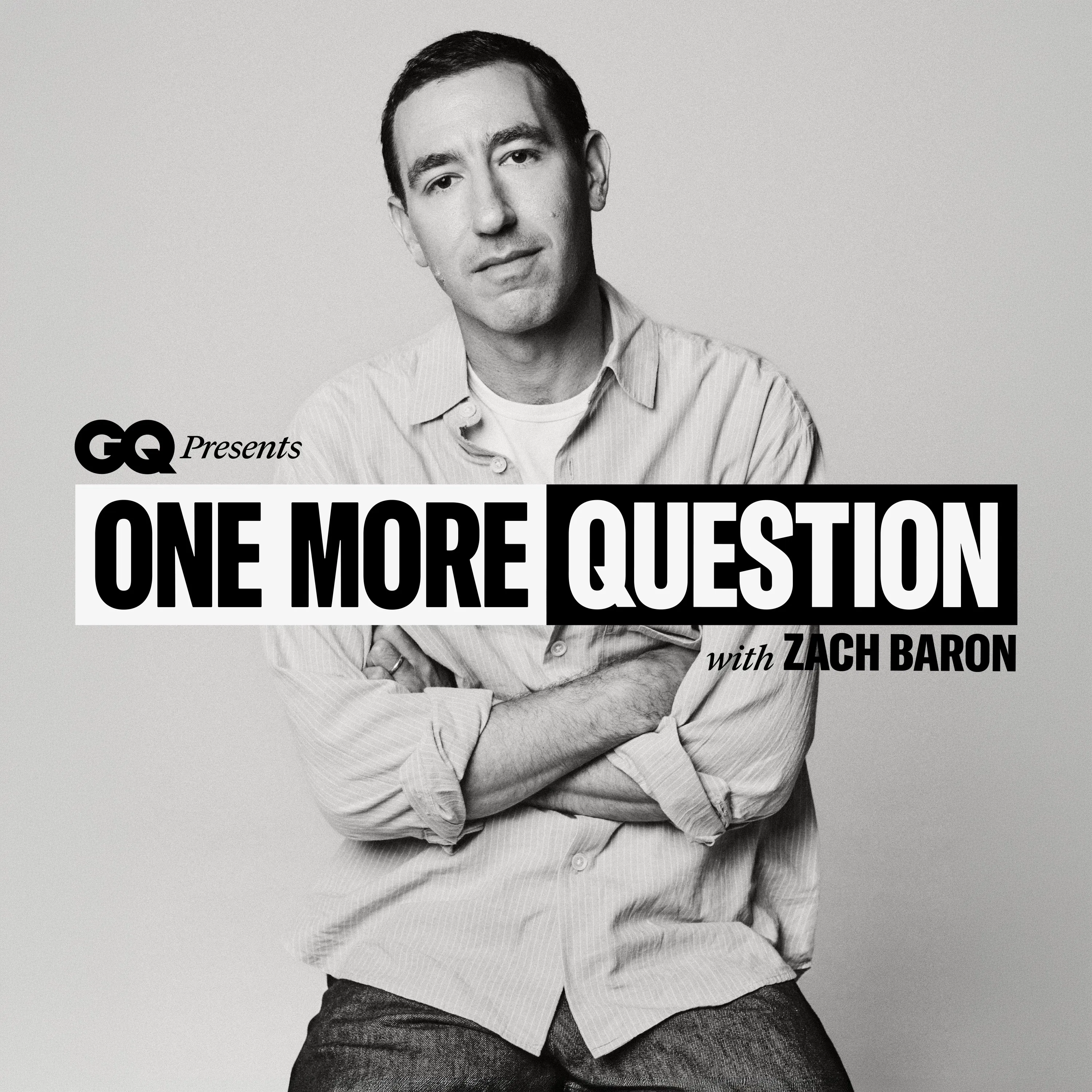
One More Question with Zach Baron | GQ
Ethan Hawke
This debrief was written and voiced by AI from the episode's audio.
🎧 AI Debrief
🎙️ Full Episode
Key Moments
Hawke explains that his prolific output stems from both genuine love of storytelling and an uncomfortable restlessness he's learned to channel productively. Work makes the void go quiet, though intellectually he wonders why sitting still with that void doesn't appeal to him.
Hawke reveals he hasn't really said yes to projects in the traditional sense—most of his recent work (The Good Lord Bird, Blue Moon, The Lowdown) emerged from friendships and shared creative vision. He pitches ideas to collaborators rather than reading scripts at a desk.
Hawke discusses the direct correlation between how much he loves a project and how little he gets paid. Boyhood, Before trilogy, First Reformed, Dead Poets Society—all passion projects. The bigger the paycheck, the less likely he cares about it.
Hawke reveals that Linklater coached him differently on Blue Moon, being unusually harsh because the role required Hawke to play a sexually insecure man without confidence. Linklater shaved his head and demanded he go to the wall of his talent, which Hawke loved despite the difficulty.
Hawke reflects on his five acting nominations (Training Day, Boyhood, First Reform) and two writing nominations. He'd actually prefer jury prizes from Cannes, Berlin, or Venice because they're untainted by industry politics. He notices the thirteen-year-old inside him still thinks it's awesome.
Hawke candidly reveals that his first Oscar nomination for Training Day coincided with his divorce, turning a career high into a personal collapse. He wrote about this period extensively in his novel Bright Ray of Darkness.
Hawke articulates his view that fame operates as a corrosive disease that isolates and deranges people. It's a zoo, and zoo animals go nuts. He's learned to maintain a sustainable level of fame where he can work with great people but still go to the grocery store.
When asked if material pressure still drives him, Hawke answers with 'four kids'—and unpacks how paternal responsibility is the only thing that can't be compromised. Five Oscar nominations mean nothing if family obligations aren't met.
Hawke acknowledges that there's an entire generation of moviegoers who don't know him as a 1990s icon, and he's genuinely okay with it. He no longer carries that flag; the label is less interesting as he matures.
Hawke explains that Sterling Harjo's FX series The Lowdown embodies everything he cares about—punk, unpretentious, real storytelling. He left his penthouse to work in Oklahoma because the work matters more than comfort. Harjo is a real artist, and Hawke wanted to collaborate.
Hawke is thrilled to work with Tommy Lee Jones in season two of The Lowdown, calling him the smartest person in every room and allergic to phoniness. Working with him is intimidating but energizing because Hawke can feel himself improving.
Hawke explains that he wanted to make an action movie—inspired by John Huston's adventure on The African Queen—before he became too old for the hero role. He made The Wait, about a Depression-era man in a prison camp, with director Padraig Daly. He's probably already too old, but he wanted to try.
Hawke reflects on the posters of his face that hung in college dorm rooms decades ago. Those days are gone, and while he didn't take pride in them then, he can now look back and think it's cool. The key is embracing what is rather than mourning what was.
Hawke talks about being at the Oscars and seeing Jack Nicholson and Warren Beatty present, with his friend joking 'get off the stage, old man.' Now that he's their age, he still loves that story—because young people are supposed to want their turn. If you don't have anything new to say, you should hand over the mic.
Search Episode
Summary
In this episode of One More Question, host Zach Baron sits down with actor Ethan Hawke to discuss his prolific career spanning three decades, his starring role in FX's The Lowdown, and the tension between artistic integrity and commercial success. Hawke reflects candidly on his relentless creative output—driven by a combination of genuine passion for storytelling and an uncomfortable restlessness he's learned to channel productively. He discusses how his most meaningful work often correlates inversely with pay, citing projects like Boyhood, the Before trilogy, and First Reformed as career highlights that emerged from friendship and shared creative vision rather than studio mandates. Hawke also opens up about navigating fame, personal struggle, and the transformative power of art, drawing on his novel Bright Ray of Darkness as a meditation on depression, infidelity, and redemption through theater. At 55, he's made peace with no longer being the generational icon of the 1990s, finding freedom in aging out of certain roles while looking ahead to more complex characters. The conversation touches on his five Oscar nominations, his collaboration with Rick Linklater, and his appetite for challenging projects like The Wait, revealing a man still driven by the question of what substantive art can do.
Key Takeaways
The best creative work often pays the least; passion projects driven by friendship and artistic vision trump commercial opportunity.
highHawke channels personal discomfort and restlessness into prolific output as a way to quiet the void; work itself becomes a form of psychological management.
highFame operates as a corrosive force that isolates and disorients; maintaining a sustainable level of fame where you can still go to the grocery store is preferable to total celebrity.
highActing and writing are shadow selves for Hawke—fiction allows him to explore aspects of his psyche and experience that film cannot capture with the same depth.
mediumParental responsibility is the one non-negotiable priority; five Oscar nominations mean nothing if family obligations aren't met.
highGenerational identity is a temporary label; the real work is learning to evolve beyond the roles and archetypes that defined your youth.
mediumDifficult shoots and challenging collaborators make better work; the appetite for hardship as a creative tool remains undiminished at 55.
mediumNotable Quotes
“I feel really lucky actually to answer that question. That I have a certain level of fame that is very pleasing to me, if I'm allowed to say that, which is that I'm getting to work with really talented people, and I really can go to the grocery store.”
— Ethan Hawke
On finding the sweet spot of fame—enough to collaborate with great artists, not so much that privacy and normalcy vanish.
“Fame is a black death. It's like being put in a zoo. Zoo animals go nuts, and so do human beings.”
— Ethan Hawke
A blunt assessment of celebrity's isolating and destabilizing effects, framed in his novel but reflective of his real concerns.
“The only thing that's really real is the relationships. Everything else—the accomplishments, the nominations—evaporate if your family is suffering.”
— Ethan Hawke
On the hierarchy of what actually matters in life, grounded in his experience as a father of four.
“If you want to live a meaningful, substantive life in the arts, there is a path. If you want to chase the black death, that's a path too. But you have to be very awake to see which path you're on.”
— Ethan Hawke
From his novel, reflecting the core tension he navigates: artistic integrity versus the seductions of fame and money.
“I wanted to act in an action movie before I got too old to play the hero. In five minutes, you'll be too old. I probably already am. But I wanted to try.”
— Ethan Hawke
On the awareness of aging and the window closing for certain roles, balanced against looking ahead to Prospero and King Lear.
Predictions
Younger generations will mount significant cultural movements in music, live theater, and communal art, punching back against digital isolation and algorithm-driven entertainment.
— Ethan Hawke · Confidence: medium · Near future, ongoing
Massive amounts of books will be written about the internet's impact on attention spans, but nobody will read them.
— Ethan Hawke · Confidence: medium · Long term
The greedy bastards who think they control everything will lose in the end because their lives are worthless; money and power don't last.
— Ethan Hawke · Confidence: low · Existential/long term
Action Items
Recalibrate your definition of success away from prestige metrics (awards, status, money) and toward work that aligns with your actual values and the people you respect.
Hawke's career demonstrates that the most satisfying projects often emerge from friendship and shared passion, not industry opportunities or financial incentives.
If you're in a creative field, seek out collaborators who will challenge and push you rather than coddle you; difficulty often produces better work.
Hawke's relationship with Rick Linklater on Blue Moon and his approach to working with Tommy Lee Jones shows how friction between talented people elevates the final product.
Be awake to which path you're on—the path of substantive art or the path of chasing fame and money—and make that choice consciously rather than by default.
The recurring tension in Hawke's work and writing is the need for constant vigilance about what you're actually serving.
Consider fiction or creative writing as a way to explore parts of yourself and your experience that other mediums can't capture; don't limit yourself to one form.
Hawke's novel allowed him to excavate depression, infidelity, and transformation in ways acting and film could not.
Find your sustainable level of visibility and protect it; enough profile to do meaningful work, not so much that you lose privacy and realness in relationships.
Hawke explicitly values being able to go to the grocery store unharassed while still collaborating with world-class artists.